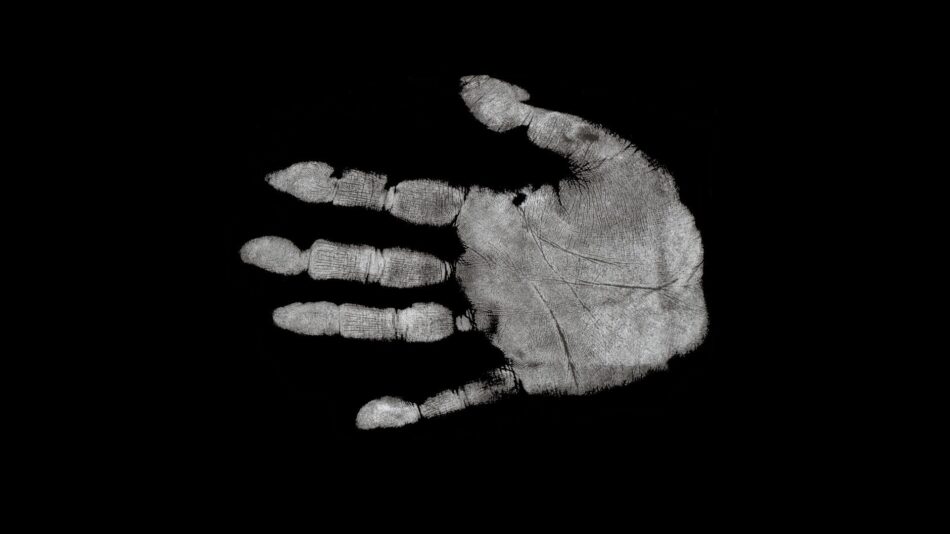
Adjusting your airbrush you notice your fingers aren’t working normally. Your digits are tingling as if being stuck with pins and needles. As you go to apply those first dagger strokes something is drastically wrong. Not only are you struggling to complete the most basic of airbrush strokes, but just holding the airbrush and rocking the trigger is causing bursts of pain to radiate from your hand, up your arm, and into your shoulder. The pain, almost unbearable, seems to have come out of nowhere.
You put the airbrush down and shake your hand vigorously; the tingling in your index finger and pain in your forearm seem to diminish. Trying to account for your sudden dysfunction you convince yourself the numbness and tingling in your fingers and pain in your arm and shoulder are the result of having slept in an awkward position on your arm.
One more time you attempt those warm-up dagger strokes and again meet with failure. After years of professional airbrushing your hand isn’t working! You realize there’s more to these symptoms than just having slept on your arm. You have a sick, sinking feeling in the pit of your stomach. You are overwhelmed by fears of paydays slipping away. Face it, for many artists, hands equal money. They don’t work? Guess what: you’re screwed!
Have you considered the possibility that your symptoms could be the early or even advanced stages of Carpal Tunnel Syndrome (CTS)? Sometimes it’s hard to admit. Yet ignoring early symptoms can lead to complications later.
Sound like a far-fetched scenario? Ask Kris Olson of Kris’s Kustom Paints, Satsuma, Florida, it it sounds far-fetched.
“Dagger strokes—forget it,” he says. “When 1 had carpal tunnel a good series of dagger strokes was pretty much impossible.”
Olson, who has been airbrushing for ten years, specializes in painting motorcycle tanks, fenders, and frames. “It was my interest in motorcycles that led me to picking up the airbrush,” he says.
1 met Olson at the Charlotte, North Carolina, Airbrush Getaway last spring.
“When 1 came to the Charlotte Getaway in May of ’07 1 was searching for answers because 1 figured my carpal tunnel would finish me off and I’d never airbrush again,” he told me. “My carpal tunnel was a process; 1 knew 1 had a serious problem when 1 couldn’t even lift a glass of water. I was no stranger to carpal tunnel because before 1 took up professional airbrushing 1 was swinging a heavy steel-handled hammer and had developed carpal tunnel from time-to-time,” Olson said.
The carpal tunnel is an opening through the wrist to the hand. The opening is formed by the bones of the wrist on the bottom of what is known as the transverse carpal ligament. This opening forms the carpal tunnel, according to handuniversitv-.com, a popular web site that explores hand ailments.
The transverse carpal ligament (ligaments connect bones) is on top of the carpal bones and the median nerve that passes through the carpal tunnel bones. The median nerve is important because it gives feeling to the thumb, index finger, middle finger, and half the ring finger.
Besides causing problems with even the most basic airbrush strokes, Olson said the pain from CTS that fired up his arm and into his shoulder and neck was as bad as he’s ever had to deal with.
“I’ve been in a few bar brawls, a motorcycle accident, and a fall from a scatfold; nothing was like the pain from carpal tunnel,” he said.
“It was like the pain from an impacted wisdom tooth—there’s no way around it. It was constant.”
Olson said the pain got so bad he couldn’t remove change from his pockets.
“There were times the pain in my arm and neck was so bad 1 couldn’t move around my house,” he said.
Before his most recent bout with CTS, Olson had enrolled in the late Robert Benedict’s class, “How to Kustom Paint Motorcycles.” He didn’t want to waste his money, so he went to Charlotte not even knowing if he’d be able to complete the class.
Olson had another problem. Because of his physician’s prescribed bracing and rest, he hadn’t held an airbrush in his right hand for two months.
“The repetitive stress from 30 years of swinging a hammer framing houses in Central Florida and scraping glue off tile floors finally took its toll,” said Olson.
“I was using a classic Paasche double-action airbrush before the numbness in my index and middle fingers got so bad 1 had to consult a doctor,” he said. “1 couldn’t operate the trigger properly.”
It was a doctor who told him that if he wanted to avoid possible surgery and pursue his airbrush career, he would need to rest his hand for two months; buy a new, lighter, wooden-handled hammer
(he had been using a heavy steel handled hammer), and purchase a prescribed hand brace to wear day and night for at least 60 days.
“It cost me $25 tor a new hammer and $30 for a brace. Two months without working cost me a bit more,” Olson said, with more than a hint of understatement.
Arriving at the Charlotte Getaway, he immediately sought the counsel of Benedict, who had heard about Olson’s situation through the airbrush grapevine and was more than willing to lend an ear to a new student.
“1 told Benedict 1 had issues with carpal tunnel and the traditional airbrush trigger was now difficult, if not impossible, to use. I told him 1 hadn’t used an airbrush in two months. I was following my doctor’s orders,” Olson recalled.
Benedict’s solution was to introduce him to someone else attending the Getaway, Dave Monnig of Coast Airbrush, the Anaheim, California-based airbrush specialty store.
“Dave got a quick grasp of my problem and offered a possible solution,” said Olson. “He suggested 1 give the Iwata Revolution TR Airbrush, with a pistol trigger and fixed dual-action operation, a try.”
Monnig told Olson the pistol-trigger might be easier to use. He had the Iwata in stock and could have one shipped to Charlotte overnight. To help defray the cost, Monnig offered to split the shipping to get the airbrush to Charlotte.
According to the manufacturer, the two most popular models available in the Iwata Revolution TR Airbrush series are the TRI (0.3mm) with a 1/4 oz. side-mount color cup and the TR2 (0.5mm) with a 1/2 oz. side-mount cup. Both feature the F A450 pistol grip filter and can be used with 1-ounce and 2-ounce side-mounted bottle sets sold separately.
“The Iwata TR wasn’t going to be cheap, a lot more than my basic Paasche, but a S200-plus investment would be worth every penny to me if 1 could keep airbrushing,” said Olson.
According to him, as soon as Monnig took the Revolution out of the box and set it up in Benedict’s class, Olson started doing dagger strokes. Even-thing worked—his hand, the airbrush, etc.
“The doctor, Benedict, and Monnig were all instrumental in getting me back to where 1 am today,” Olson said.
Olson said it took him no time to make the transition from traditional trigger to the pistol-style trigger. “1 did a lot of house painting using a pistol trigger spray gun, so 1 was used to the pistoltype,” he noted.
Thankfully, Olson’s two months off from work and the use of the prescribed brace, along with help from Benedict and Monnig, have brought him to the point where he’s airbrushing today with no lingering symptoms of CTS.
Here’s another happy twist to his story: Olson, who has so tar overcome his CTS without surgery, said he could easily go back to the traditional trigger but has grown so accustomed to the Iwata Revolution TR he has no plans to change.
“Everything is going great, so why change?” Olson chuckled.
CAN IT BE THAT SIMPLE?
Don’t think tor a minute, however, that a pistol-style trigger airbrush alone will eliminate hand problems associated with CTS.
Andrew Aylett, occupational therapist and certified hand therapist at Advanced Hand Rehabilitation, Manasquan, Neu-Jersey, treats CTS patients daily and offers professional insight into some of the common symptoms.
“CTS is an inflammation affecting the flexor tendons that pass through the carpal tunnel. This in turn places pressure on the median nerve, creating the symptoms of intermittent tingling (pins and needles) and pain in the thumb, index, middle, and ring fingers,” Aylett notes.
“It is frequently worse at night, waking the individual from sleep,” he adds. “As it progresses, the symptoms may spread throughout the hand and radiate up the arm towards the shoulder. Weakness of grip and difficulty with fine motor activities, such as picking up coins, may become more evident as the condition progresses.”
Aylett, who was emailed photographs of a classic Iwata airbrush trigger (overhead/rocking motion), said the Revolution TR airbrush with a pistol-type trigger could require less force for a CTS sufferer. He also suggested that the wrist and finger position required on the pistol-trigger might not add to compression of the median nerve.
Both Aylett and Jimmy Smith, director of physical therapy at Crest Physical Therapy, also in Manasquan, caution that even pistol-type triggers, while perhaps easing the symptoms of CTS, could pose problems for artists already suffering from “trigger finger,” another common hand ailment.
Trigger finger occurs when the motion of the tendon that opens and closes the finger is limited, causing the finger to lock or catch as it’s extended.
“If I suspected CTS was related to the specific act of airbrushing, or existing CTS was getting worse because of airbrushing, 1 would have to sit with rhe artist and actually watch the finger, hand, wrist, arm, and shoulder movements involved before 1 could suggest specific non-invasive therapies,” Smith says.
“As I understand it, while the basic techniques of airbrushing are taught as fundamentals, to get those fundamentals down each artist could use different hand, arm, and shoulder movements to achieve the same result,” he adds.
Aylett believes that CTS is preventable to some extent by avoiding highly repetitive activities involving the hands, taking frequent breaks during prolonged repetitive actions, and responding immediately to the first symptoms of CTS.
“Responding quickly to the symptoms can make a huge difference in a long-term prognosis,” he points out.
He recommends seeing a medical doctor (hand specialist, or an orthopedic or plastic surgeon) if the symptoms become a daily occurrence or wake the individual from sleep, or if the pain increases dramatically.
“A doctor may in turn refer the patient to a neurologist to confirm the diagnosis,” Aylett says.
WHEN IS SURGERY USUALLY THE ONLY OPTION LEFT FOR CTS?
Aylett says that after exhausting all non-surgical therapies— behavior changes, wrist splints, tendon gliding exercise, ultrasound, cold laser, massage, icing and anti-inflammatory medications or injections (the latter two options prescribed and administered by a physician)—he usually advises patients as follows: If symptoms have not subsided considerably over a six-week period, and at the venleast patients have not experienced long periods of no symptoms at all, then perhaps they should consider surgery.
Smith says he, too, would exhaust all non-invasive therapies before recommending surgery; but when the pain becomes too great, interrupting sleep and causing inability to shake hands, coupled with loss of hand strength (e.g., dropping objects like coins, or difficulty tying shoe laces), then one risks permanent nerve damage in failing to consult a hand or orthopedic surgeon.
If surgery isn’t needed, Smith says, other than seeing an occupational or certified hand therapist, some people have found relief in treatment by an acupuncturist, chiropractor, or massage therapist.
WHAT IF SURGERY LOOKS LIKE THE ONLY OPTION?
According to Aylett, surgery is a common procedure in the treatment of CTS. “Two basic approaches are taken. One is the ‘open approach,’ where the surgeon makes an incision over the heel of the hand,” he said. “The second is the arthroscopic approach.”
With arthroscopic surgery, Aylett says the surgeon makes two small incisions in the hand and a surgical tool is inserted to release the Carpal tunnel.
“Both methods usually produce excellent results,” he says. “The first approach has a slower healing time hut is less risky. The most important factors in the success of either surgery, other than the skills of the surgeon, are the duration and intensity of the symptoms.”
“As a general rule, the longer the history of symptoms, the less effective the treatment,” Aylett believes.
Smith views surgery as usually the option of last resort and advises those diagnosed with CTS to exhaust all non-invasive therapies beforehand. “Surgery may have to be done to relieve severe symptoms, most especially to prevent nerve damage,” he says.
As for over-the-counter medications, both Aylett and Smith emphasize that before taking any you should check with a physician. “An M.D. will know what medications you’re taking and what will help with the pain and swelling associated with CTS,” Smith says. *